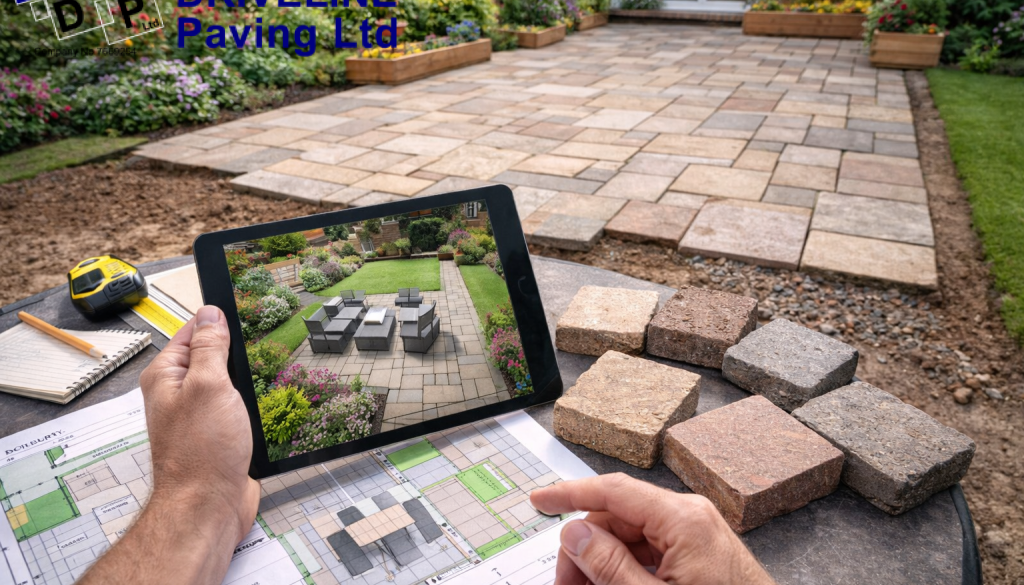
How to Plan the Perfect Patio Layout for Your Sudbury Garden
Planning a patio isn’t just about choosing slabs or picking a style you like. The layout plays a big role in how usable the space actually feels once it’s finished.
If you’re working on a patio layout Sudbury, homeowners can enjoy year-round, it needs to fit both your garden and how you plan to use it. A well-planned layout can make a smaller garden feel more open, or turn an awkward space into something practical.
This guide walks through how to approach your patio design so it works long after installation is complete.
Why Layout Matters More Than You Think
It’s easy to focus on materials first, especially when you’re comparing finishes or looking at design ideas. But before any of that, the layout is what determines how the space actually works once it’s in use. It shapes how you move through the garden, where people naturally gather, and whether the patio feels like part of the home or something separate from it.
A poorly planned patio often looks fine on its own, but starts to feel off in day-to-day use. You might notice that it feels cramped once furniture is added, or that there’s an awkward gap between the house and the seating area. In some cases, the layout limits how you can arrange tables or chairs, forcing everything into positions that don’t quite feel right.
Common layout issues include:
- Spaces that feel too tight once fully furnished
- Areas that don’t connect naturally to doors or pathways
- Sections of the patio that go unused because they don’t serve a clear purpose
These aren’t always obvious at the planning stage, which is why layout deserves more attention early on.
A well-thought-out layout, on the other hand, brings everything together. It creates a natural flow between indoor and outdoor spaces, making the patio feel like an extension of the home rather than a separate feature.
Start With How You Want to Use the Space
Before thinking about size, shape, or materials, it’s worth stepping back and asking a simple question: what do you actually want to use the patio for?
This decision influences everything that follows, from layout to positioning and even material choice.
A patio designed for dining will need enough room for a table and chairs and for people to move around comfortably without feeling restricted.
Seating areas, on the other hand, often benefit from a more open layout that feels relaxed rather than tightly structured. If the space connects different parts of the garden, walkways need to be clear and practical, allowing easy movement without cutting through key areas.
Taking the time to define how you’ll use the patio helps avoid compromises later on and makes it easier to create a layout that feels natural in everyday use.
Choosing the Right Position in Your Garden
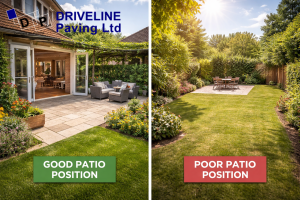
Where the patio is placed can have just as much impact as how it’s designed. A well-positioned patio feels comfortable and easy to use, while a poorly placed one can feel exposed, inconvenient, or disconnected from the rest of the space.
Sunlight is one of the first things to consider.
A patio that gets consistent natural light is usually more inviting, but too much direct sun without any shade can make it uncomfortable during warmer days. Finding a balance between light and shelter helps create a space that works throughout the day.
Privacy is another factor that often gets overlooked at the planning stage.
Positioning the patio in a more enclosed or sheltered part of the garden can make it feel more usable, especially for relaxing or entertaining.
Access also plays a big role.
A patio that sits close to the house tends to be used more often because it feels like an extension of the indoor space. If it’s too far away or awkward to reach, it can end up feeling separate and underused, even if the design itself is solid.
How Size and Shape Affect the Overall Look
The shape of your patio can change how the entire garden feels.
Straight, rectangular layouts often suit modern properties and create a clean, structured look. Curved or irregular shapes can soften the space and work better in more traditional or landscaped gardens.
Size matters too, but bigger isn’t always better. A patio that’s too large can overwhelm the space, while one that’s too small can feel restrictive. The goal is to balance usable space with the rest of the garden.
Material Choices That Complement Your Layout
Once the layout is clear, materials can enhance the design rather than define it.
For example:
- Porcelain works well for modern, clean layouts
- Natural stone suits more traditional gardens
- Mixed materials can create defined zones within a larger patio
The key is consistency. Materials should match the style of the property and the intended use of the space.
Creating Zones Within Your Patio
For larger patios, breaking the space into zones can make it more functional.
This could include:
- A dining area
- A seating or lounge space
- A pathway connecting different sections
Zoning helps the patio feel organised rather than open and undefined. It also makes it easier to use the space for different purposes without it feeling cluttered.
Working With Professional Patio Installers
Even with a strong layout idea, the way it’s executed makes a big difference.
Experienced installers can:
- Adjust designs based on ground conditions
- Ensure proper levels and drainage
- Suggest practical improvements you might not have considered
If you’re moving forward with a project, it’s worth exploring patio installation in Sudbury to see how a structured approach can bring your layout to life without compromising on quality.
Common Layout Mistakes to Avoid
Some issues only become obvious after the patio is finished.
Common mistakes include:
- Not leaving enough space for furniture
- Ignoring how people move through the garden
- Placing the patio too far from the house
- Overcomplicating the design
Keeping the layout simple and practical usually leads to better long-term results.
Bringing Your Patio Layout Together
A well-designed patio doesn’t just look good; it works naturally with your space and lifestyle. By focusing on layout first, you create a foundation that supports everything else, from materials to furniture placement.
Taking the time to plan properly makes the difference between a patio that’s rarely used and one that becomes a central part of your home.
Reach out to us and plan your perfect patio today.


