How to Choose the Right Paving for Your Epping Home
Choosing new paving is not only about what looks good on day one. It is about finding the right surface for how you actually use your home, how much maintenance you want to deal with, and how well the finished result will cope with the British weather.
Here at Driveline, we speak to homeowners in Epping who are often weighing up the same question. What is the best choice for a driveway, a patio, or a garden path? The answer depends on your priorities, because the right paving for one property can be completely wrong for another.
In this guide, we will walk through the main things to consider before you decide.
What to consider before choosing paving in Epping
Before selecting a material, it helps to step back and look at the full job rather than just the surface finish.
A few of the biggest factors are:
- how the area will be used
- whether vehicles will be parked on it
- how much drainage the space needs
- how much maintenance you are happy to take on
- whether appearance or practicality matters most
- the style and age of your property
For example, a family driveway in Epping that takes daily vehicle use needs something very different from a quiet patio area designed mainly for sitting and entertaining. In the same way, a shaded garden path may need a different finish from a sun-exposed front drive.
Which paving works best for driveways, patios and garden paths?
Different areas of your property place different demands on paving.
Driveways
Driveways need strength, stability, and a properly built base. They also need to cope with regular vehicle weight, turning pressure, and the weather throughout the year.
For many homes in Epping, popular driveway choices include block paving, resin, and tarmac. Each can work well when installed properly, but they offer different looks and maintenance levels.
Patios
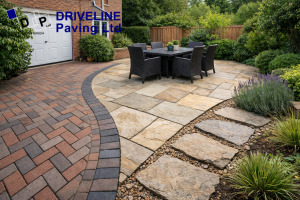
Patios are usually chosen more for appearance, comfort, and lifestyle. This is where homeowners often lean towards natural stone, porcelain, or decorative paving slabs, depending on the look they want.
A patio should still be practical, of course, but the finish, colour, and feel underfoot tend to matter more here than they do on a driveway.
Garden paths
Paths need to be safe, durable, and easy to maintain. They also need to sit naturally within the garden design. In many cases, slabs, block paving, gravel, or natural stone can all work well, depending on the route and how formal you want the garden to feel.
Block paving, resin, natural stone and tarmac, key differences
If you are comparing materials, here is a practical overview of the main differences.
Block paving
Block paving remains one of the most popular choices for driveways because it is hard-wearing, attractive, and flexible in design. It works well for both traditional and more modern homes.
It is a strong all-round option if you want:
- a wide choice of colours and patterns
- a smart, established look
- the ability to repair individual areas if needed
It does, however, need proper installation and occasional maintenance to keep it looking its best.
Resin
Resin is often chosen for its clean, modern finish. It can be especially appealing if you want a smooth surface and a more contemporary look.
It is often a good fit if you want:
- a neat and modern appearance
- a low-maintenance finish
- a permeable surface that helps with drainage
Resin can be a very smart option, but it needs to be installed correctly over the right base. Done badly, it can go wrong fast. There is the glamorous truth of paving.
Natural stone
Natural stone is a favourite for patios because of its character and premium appearance. It can suit a wide range of garden styles, from classic to more rustic outdoor spaces.
It is often worth considering if you want:
- a natural, high-end finish
- variation in tone and texture
- a patio that feels more bespoke
Natural stone can need more thought around upkeep and finish selection, but for the right project it can look excellent.
Tarmac
Tarmac is a practical and cost-effective option, especially for driveways. It gives a neat, simple appearance and is often chosen where durability and value matter more than decorative detail.
It can be a sensible choice if you want:
- a straightforward driveway surface
- good durability
- a more budget-conscious option for a larger area
It is less commonly chosen for patios, where appearance tends to play a bigger role.
How weather, drainage and usage affect paving choice
This is where a lot of homeowners make the wrong call. They focus on colour and pattern, but not on the conditions the paving will need to cope with.
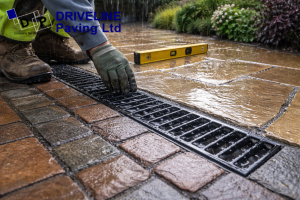
In Epping, paving needs to deal with rain, cold spells, general wear, and in some cases poor drainage or sloping ground. If surface water is not considered properly from the start, even a great-looking installation can become a nuisance later.
That is why we always look at:
- drainage requirements
- water runoff
- whether permeable materials may be beneficial
- how heavily the area will be used
- the condition of the existing ground beneath
A patio that constantly holds water or a driveway that starts moving because the base was not built correctly is not a material problem alone. It is usually a planning problem.
Common paving mistakes homeowners make before installation
We see a few issues come up again and again.
Choosing on looks alone
A surface may look excellent in a photo, but that does not mean it is right for your property or how you use the space.
Underestimating drainage
Poor drainage can cause standing water, slippery areas, and long-term issues with the surface and surrounding property.
Not thinking about maintenance
Some paving needs more ongoing care than others. If you want something that stays tidy with minimal effort, that should influence the material you choose.
Focusing only on the cheapest quote
Price matters, of course, but the cheapest option can become the most expensive if the installation is poor and needs correcting later.
Treating all areas the same
Your front drive, patio, and side path do not all need to be built the same way. They serve different purposes and should be planned accordingly.
When to prioritise appearance, maintenance or durability
Most homeowners want all three, but usually one factor matters most.
If appearance is your priority, you may lean towards natural stone, porcelain, or a decorative block paving design.
If low maintenance matters most, resin or certain slab options may be more appealing.
If durability is the main concern, especially for driveways, block paving and tarmac are often strong contenders depending on the property and layout.
The best results usually come from being honest about how you live. A patio that looks stunning but becomes a constant chore may not be the right choice for your household. Equally, a purely practical driveway may leave you wishing you had gone for something smarter every time you pull up outside.
Getting your paving project planned properly from the start
A good paving project starts long before any materials are laid. The planning stage matters more than most people realise.
That means looking at:
- the purpose of the area
- the measurements and layout
- drainage and levels
- material suitability
- access
- edging and finishing details
- how the new paving will tie in with the rest of the property
Here at Driveline, we always recommend planning the whole job properly from the outset rather than rushing into a material choice based on a few online pictures. Inspiration is useful, but real-life suitability matters more.
Speak to a local paving contractor in Epping before you decide
If you are still comparing options, the best next step is to get advice based on your actual property, not guesswork.
Here at Driveline, we help homeowners in Epping choose paving that fits the space, the style of the home, and the way the area will be used. Whether you are planning a new driveway, patio, or garden path, we can talk you through the most suitable options and help you get the project right from the start.
If you would like advice or a quote, take a look at our Epping paving service page and get in touch.