
Small Garden Patio Ideas for Saffron Walden Homes
For many Saffron Walden properties, garden space can vary widely. Some homes have narrow rear gardens, courtyard-style spaces, side returns, or smaller outdoor areas that need careful planning.
The mistake many homeowners make is thinking a patio needs to be large to be worthwhile. In reality, a smaller patio can often be easier to maintain, more comfortable to use, and better suited to everyday living.
If you are planning a new patio and want professional help with the installation itself, Driveline Paving Ltd provides patio installation in Saffron Walden for homeowners looking to create a more usable garden space.
Plan the Patio Around One Main Purpose
Small patios work best when they have a clear purpose. Trying to fit too many uses into one compact area can make the garden feel crowded before anything has even been installed.
Start by asking what you want the patio to do most of the time. Common uses include:
- Outdoor dining
- A quiet seating area
- A space for plant pots and garden styling
- A low-maintenance alternative to lawn
- A practical route from the house to the garden
- A family area for relaxing in warmer months
Use Simple Shapes to Make the Space Feel Bigger
In compact gardens, the shape of the patio matters. Overly complicated layouts can make a small space feel busy, especially if there are too many edges, borders, or changes in direction.
Simple square, rectangular, or gently curved layouts are often more effective. They create a cleaner visual line and make the garden easier to understand at a glance.
A rectangular patio running along the back of the house can work well for dining, while a square patio tucked into a sunny corner can create a calm seating area.
For narrow gardens, avoid cutting the space into too many separate zones. A long, clean paved area with planting along one side may feel more open than a patio broken up by too many features.
If you want to add interest, use planting, furniture, lighting, or edging rather than making the paved shape too complicated.
Choose Patio Materials That Suit Smaller Gardens
Material choice has a big effect on how a small patio feels. Some materials create a soft, traditional look, while others give a cleaner and more modern finish.
Natural stone can work beautifully in older or character homes because it adds texture and variation. It can soften the look of a small patio and help it blend with planting.
Porcelain paving is often chosen for a clean, contemporary finish and can suit homeowners who want something easier to maintain.
Concrete slabs can be practical for straightforward spaces where budget and durability are priorities.
In a small garden, consistency is important. Too many colours or patterns can make the patio feel visually cluttered. A calmer paving choice usually works better because it allows furniture, plants, and garden features to stand out without competing with the surface.
If the garden already has brickwork, fencing, rendered walls, or stone details, it is worth choosing patio materials that sit comfortably with those existing finishes.
Pick Lighter Tones for a Brighter Patio
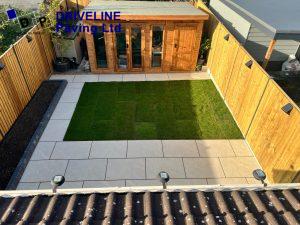
Colour can change how spacious a patio feels. Lighter paving tones often help small gardens feel brighter, especially where the space is shaded by fences, walls, neighbouring buildings, or trees.
Soft beige, light grey, cream, buff, or warm neutral tones can reflect more light and make the area feel more open. Darker paving can look smart, but in a small or shaded garden it may make the space feel heavier unless balanced with pale walls, bright planting, or good lighting.
That does not mean every small patio has to be very light. The best choice depends on the property style, garden aspect, and maintenance expectations. However, if the goal is to make the space feel bigger and more inviting, lighter or mid-tone paving is often a safe starting point.
Keep the Layout Easy to Walk Through
A patio should not interrupt how you move through the garden. In smaller spaces, poor circulation can make the whole area feel awkward.
Think about the natural route from the back door to the garden, shed, side gate, bins, or outdoor storage. These routes should stay clear, even once furniture is added.
A common mistake is planning the patio around empty space, then reali
sing later that chairs, pots, or tables block the walkway.
For a small garden patio, it may help to leave one clean route through the space. This could be along one side, through the centre, or around the edge depending on the garden shape. The patio should feel easy to use, not like a puzzle you have to step around.
Use Built-In Edges and Borders Carefully
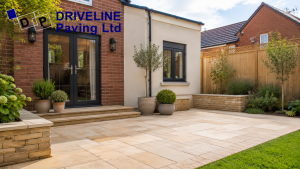
Borders can make a small patio look more finished, but they should be used carefully. Thick or highly contrasting borders can make a compact patio feel smaller because they visually frame and reduce the paved area.
A subtle border can work well when it helps define the space without overpowering it. This might include a simple edging course, a narrow planting strip, or a neat transition between paving and lawn. Raised beds can also be effective, but they should be scaled properly so they do not take over the available area.
Add Planting Without Losing Floor Space
Wall-mounted planters, slim raised beds, vertical planting, and taller pots can all help. Instead of spreading lots of small pots across the patio, group a few larger planters together. This looks more intentional and keeps the surface easier to move around.
Good planting choices for small patios often include:
- Tall grasses for movement and softness
- Evergreen shrubs for year-round structure
- Climbing plants for fences or walls
- Herbs near seating or dining areas
- Potted trees for height and shade
Think About Drainage Before the Patio Is Laid
A properly planned patio should have the correct fall, suitable surface preparation, and drainage details where needed. This is not just a finishing touch. It affects how the patio performs over time.
Small gardens can be more prone to drainage problems because there may be limited soft ground for water to run into. Existing slopes, neighbouring boundaries, soil type, and the position of the house all matter.
Before choosing the final patio layout, it is worth thinking about where water will move during heavy rain.
Choose Furniture That Fits the Patio
Furniture can make or break a small patio. Oversized outdoor furniture may look appealing online, but it can quickly overwhelm a compact space.
Measure the patio area before buying anything. Allow room for people to pull chairs out, walk past, and move comfortably. Folding chairs, slim benches, round tables, and built-in seating can all work well where space is limited.
For a narrow patio, a bench against a wall or fence can save more space than individual chairs. For a small square patio, a round bistro table may feel softer and easier to move around than a large rectangular table.
Use Lighting to Make the Patio More Inviting
Lighting can make a small patio feel more finished and usable in the evening. It does not need to be complicated. A few well-placed lights can define the space, improve safety, and create a warmer atmosphere.
Consider lighting around steps, seating areas, pathways, or raised borders. Wall lights, low-level garden lights, and warm string lighting can all work depending on the style of the garden.
Avoid making the patio too bright. Strong lighting can feel harsh in a small space. Softer lighting usually works better because it creates depth and makes the garden feel more relaxed.
Create a Small Patio That Works Every Day
A small garden patio can still make a big difference to how you use your home. With a clear purpose, simple layout, suitable materials, good drainage, and carefully chosen furniture, even a compact space can become practical and enjoyable.
If you are planning a new patio and want the installation handled professionally, Driveline Paving Ltd can help with patio installation in Saffron Walden, including groundwork, paving, and finishing details.


