What Type of Paving Works Best for Homes in Epping?
Choosing paving isn’t just about how it looks on day one. If you’re trying to find the best paving for homes in Epping, you need to think beyond appearance and focus on how each option performs in real conditions. In a place like Epping, where weather, soil movement, and drainage all come into play, the wrong choice can start showing problems sooner than expected.
Why Choosing the Right Paving Matters in Epping
Epping properties often deal with a mix of older ground conditions, regular rainfall, and varying garden layouts. That combination makes installation quality and material choice equally important.
A surface that looks great initially can become uneven or difficult to maintain if it doesn’t suit the ground underneath. Drainage is another key factor. Without proper water runoff or permeability, even a well-installed surface can develop long-term issues.
This is why the “best” paving isn’t universal. It depends on how the space is used, how much load it carries, and how well the base is prepared.
Block Paving: Flexible and Repair-Friendly
Block paving remains one of the most popular choices for driveways, especially for homeowners who want a balance between durability and design.
It works well because:
- Individual blocks can move slightly without cracking the whole surface
- Repairs are straightforward (you can lift and replace sections instead of redoing everything)
- There’s flexibility in patterns, colours, and finishes
That flexibility matters in areas where the ground may shift slightly over time.
However, performance depends heavily on the base. Poor compaction or shortcuts during installation can lead to sinking or uneven areas within a few seasons. Weeds can also appear between joints if sealing and maintenance are ignored.
When installed properly as part of a full system, block paving can last for years while still being easy to maintain. That’s why many homeowners opt for professional paving services in Epping rather than treating it as a simple surface upgrade.
Resin Bound Paving: Clean Finish With Built-In Drainage
Resin bound surfaces have become more common in recent years, particularly for homeowners looking for a modern, low-maintenance finish.
What makes it stand out:
- It’s permeable, allowing water to drain through rather than sit on the surface
- The finish is smooth and seamless, which gives it a cleaner look than traditional paving
- It reduces the chances of puddling or surface runoff issues
In areas with frequent rain, that permeability can make a noticeable difference.
That said, resin isn’t a shortcut solution. It requires a stable, well-prepared base underneath. If the foundation isn’t solid, cracks or movement can still occur. It also comes at a higher upfront cost compared to standard block paving.
For homeowners prioritising appearance and drainage in equal measure, it’s a strong option, as long as installation isn’t rushed.
Porcelain and Slab Patios: Designed for Outdoor Living
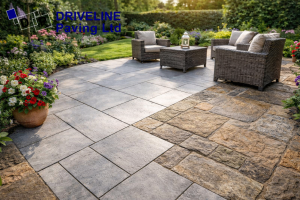
If the focus is on creating a usable outdoor space rather than a driveway, porcelain or slab paving is often the better fit.
These materials are typically used for:
- Patios
- Seating areas
- Garden walkways
Porcelain, in particular, has gained popularity because of its:
- Clean, modern appearance
- Resistance to stains and moisture
- Low maintenance compared to natural stone
Slabs, whether concrete or natural stone, offer a more traditional look and can suit older properties better.
The main limitation is load-bearing capacity. These surfaces aren’t designed for heavy vehicles, and using them in the wrong setting can lead to cracking or instability. Installation also needs precision; uneven laying or poor jointing can affect both appearance and safety.
Which Paving Type Lasts Longest in Epping Conditions?
Longevity isn’t just about the material. It’s about how well that material works with the environment and how it’s installed.
- Block paving tends to last the longest in driveways because it can adapt to slight ground movement and is easy to repair
- Resin bound surfaces hold up well against weather and drainage issues, but only when laid on a solid base
- Porcelain or slabs last well in patios where foot traffic is the main use, but aren’t suited for heavier loads
In practical terms, block paving often comes out ahead for driveways, while porcelain or slabs perform better in garden settings. Resin sits in between, offering durability with a more modern finish.
Cost Considerations: What Actually Affects the Price
It’s easy to focus on the cost per square metre, but that rarely tells the full story.
What really influences the final price:
- The condition of the existing ground
- The amount of excavation required
- Drainage solutions needed for the space
- Material quality and finish
- Size and layout of the area
In many cases, groundwork accounts for a large portion of the cost. Skipping or reducing this stage might lower the quote upfront, but it usually leads to problems later.
That’s why two quotes for the “same” driveway can vary significantly. They’re often not including the same level of preparation.
Common Mistakes Homeowners Make When Choosing Paving
A lot of paving issues don’t come from the material itself, but from decisions made early on.
One common mistake is choosing purely based on appearance. A surface might look ideal in photos but may not suit the way the space is used or the conditions it’s exposed to.
Another is underestimating drainage. Without proper planning, water can pool, seep into the base, or affect nearby structures over time.
Budget-driven decisions can also cause problems. Going for the lowest quote often means compromises somewhere, usually in groundwork or materials. Those shortcuts tend to show up within the first couple of years.
There’s also the issue of not thinking long term. Some surfaces require more maintenance than others, and not factoring that in can lead to unexpected effort or cost later.
How to Choose the Right Paving for Your Property
The best way to approach this is to match the material to how the space will actually be used.
For example:
- A driveway with regular vehicle use benefits from something flexible and repairable, like block paving
- A modern front area where drainage is a concern might suit resin bound surfaces
- A back garden designed for relaxing or entertaining is often better suited to porcelain or slabs
It also helps to think beyond the immediate project. Consider how much maintenance you’re comfortable with, how long you want the surface to last, and how it fits with the overall look of the property.
There isn’t a one-size-fits-all answer, but there is usually a clear best option once those factors are considered properly.
What This Means for Your Paving Project
Finding the best paving for homes in Epping comes down to matching the material with how your space is used, not just how it looks. It’s about how the surface performs over time, how well it handles local conditions, and whether it’s been installed with the right foundation underneath.
In Epping, where weather and ground conditions can vary, getting those details right makes a noticeable difference. A well-chosen and properly installed surface doesn’t just look better; it lasts longer and requires fewer fixes along the way.
If you’re planning a project, it’s worth taking the time to explore options and understand what works best for your property before moving forward.
Reach out to the Driveline team now for your Epping paving project now.