Skip to content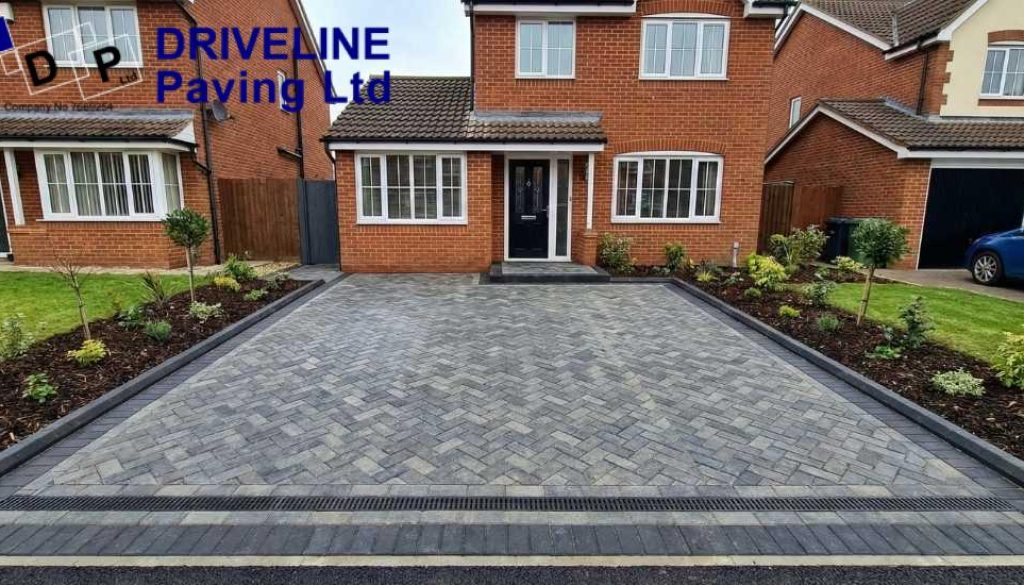
What Makes a Driveway Look Finished (And Why Many Don’t)
A driveway can be structurally sound yet still feel incomplete. The surface may be new. The colour may be right. But something feels slightly off.
That difference comes down to finish.
A quality driveway finish is not about decoration. It is about precision. Edges, levels, transitions, and drainage details determine whether a driveway looks professionally installed or hurried.
February is a smart time to study these details. When you are planning rather than rushing, you notice what separates average from exceptional.
Clean, Straight Edge Restraints
Edges frame the entire installation. Without crisp boundaries, even high-quality paving appears uneven.
A finished driveway should have:
- Straight kerb lines
- Consistent joint spacing
- Secure edge restraints with solid haunching
- No visible lateral spread
Edges that wander or dip break visual symmetry. They also signal potential movement.
When edge restraints are precise, the driveway looks deliberate and structured.
Correct Surface Levels Against the Property
Surface height matters more than most homeowners realise.
A driveway that sits too high risks bridging damp proof course levels. Too low, and it can look disconnected from entrances and thresholds.
A quality driveway finish considers:
- Correct fall away from the property
- Smooth transitions at doorways
- Level alignment with pathways
- Seamless interface with garage floors
When levels are accurate, the driveway feels integrated with the house rather than attached to it.
Consistent Jointing and Alignment
For block paving especially, alignment is critical.
A professional finish includes:
- Straight laying patterns
- Even joint widths
- Uniform sand filling
- Clean edge cuts
Misaligned blocks draw attention immediately. Human eyes instinctively notice irregular lines.
Consistency signals care.
Even in resin bound installations, smooth surface distribution and edge precision reflect workmanship quality.
Drainage That Is Functional Yet Discreet
Drainage should work efficiently without dominating the visual field.
A complete installation includes:
- Subtle channel drains where required
- Properly graded surface falls
- No visible pooling
- Clean integration with edging
When water flows correctly, it remains invisible.
Standing water or awkward drainage positioning quickly undermines an otherwise good surface.
Neat Transitions Between Materials
Many driveways meet other surfaces such as:
- Pathways
- Steps
- Brick walls
- Garden borders
- Garage entrances
A driveway looks unfinished when transitions are abrupt or uneven.
A quality driveway finish ensures:
- Smooth height changes
- Clean joint lines
- Proper material blending
- No exposed sub-base at edges
Transitions should feel intentional, not improvised.
Attention to Final Detailing
The final stage often reveals the installer’s standards.
Detailing includes:
- Cleaning excess joint sand
- Removing construction residue
- Ensuring uniform resin texture
- Checking final compaction
- Straightening edges before handover
A rushed finish leaves minor imperfections that accumulate visually.
A professional finish feels sharp, level, and deliberate.
Good Read: Beyond the Parking Space: How a New Driveway Can Boost Your Home’s Value
Balanced Proportion and Layout
The finish is not only technical. It is also a visual balance.
A driveway should look proportionate to the property. Oversized borders or awkward layout angles disrupt flow.
Design choices that improve finish include:
- Centred symmetry where appropriate
- Matching edge tones with brickwork
- Avoiding unnecessary pattern clashes
- Maintaining consistent spacing
Subtle visual coherence makes a driveway feel complete.
No Visible Signs of Structural Compromise
A driveway may look tidy on installation day but reveal weak preparation quickly.
A finished driveway should not show:
- Early settlement lines
- Loose edge blocks
- Minor dips near entry points
- Sand washout after light rain
These small signs suggest groundwork shortcuts.
True finish includes structural integrity beneath the surface.
Why Many Driveways Feel Unfinished
A driveway can be newly installed and still feel incomplete. The issue is rarely the material itself. It is usually the absence of precision.
Common reasons include:
- Rushed peak-season installation
- Insufficient design discussion
- Limited edge planning
- Poor level assessment
- Inadequate final inspection
During busy months, installation schedules tighten. When timelines compress, detailing is often the first area to suffer. Edges may be installed correctly but not perfectly aligned. Falls may technically drain water but feel slightly uneven. Transitions may function but lack refinement.
Insufficient design discussion also contributes to this unfinished look. Without proper planning, layout decisions become reactive rather than intentional. Borders may be added as an afterthought. Pattern alignment may not centre properly with the property frontage.
Limited edge planning is another common factor. Edges frame the entire installation. If they dip, bow, or lack consistent support, the whole surface appears unsettled even if structurally sound.
Poor level assessment affects visual balance. Even minor inconsistencies in height can create subtle distortion. Human vision is sensitive to alignment. A few millimetres across a wide surface can alter perception significantly.
Inadequate final inspection often leaves small imperfections uncorrected. Loose jointing sand, slightly uneven cuts, or minor surface irregularities accumulate visually.
Surface materials alone do not create completion. Precision does.
A driveway can feature premium blocks yet appear incomplete if alignment or drainage is poor. Conversely, modest materials installed with care can look exceptional.
Finish is where craftsmanship becomes visible. It is the point at which structural competence meets visual discipline.
February Is Ideal for Evaluating Finish Standards
When researching in February, you can review workmanship examples without pressure. There is time to study photographs, request site visits, and compare installation standards properly.
Instead of focusing solely on material samples, assess finish quality in detail.
Look at completed installations and ask:
- Are the edges straight and consistent along the full boundary?
- Do levels look correct relative to the property and surrounding surfaces?
- Are transitions between driveway, steps, and pathways smooth?
- Does the surface appear uniform in pattern and texture?
- Does the driveway sit naturally with the property rather than feeling added on?
Examine how borders meet corners. Observe whether drainage channels are neatly integrated or visually disruptive. Notice whether block lines remain straight across the full width of the surface.
Photographs can reveal alignment quality. In person, you can assess stability underfoot and visual balance from different angles.
Comparing workmanship details helps you choose confidently before spring demand increases. When installation season begins, decisions are often made quickly. February allows you to assess quality standards calmly and choose based on finish, not urgency.
Taking time now ensures that when your driveway is installed, it feels complete from every angle.
A Finished Driveway Feels Solid and Intentional
A well-executed driveway does not draw attention for the wrong reasons. It feels level underfoot. It handles vehicles smoothly. It drains correctly. It frames the property cleanly.
There is a quiet satisfaction in walking across a properly finished surface. It feels stable, aligned, and considered.
That outcome is not accidental. It results from planning, precision, and thorough installation.
If you are planning a new installation and want a quality driveway finish that reflects structural care and visual detail, speak with Driveline Paving Ltd.