Skip to content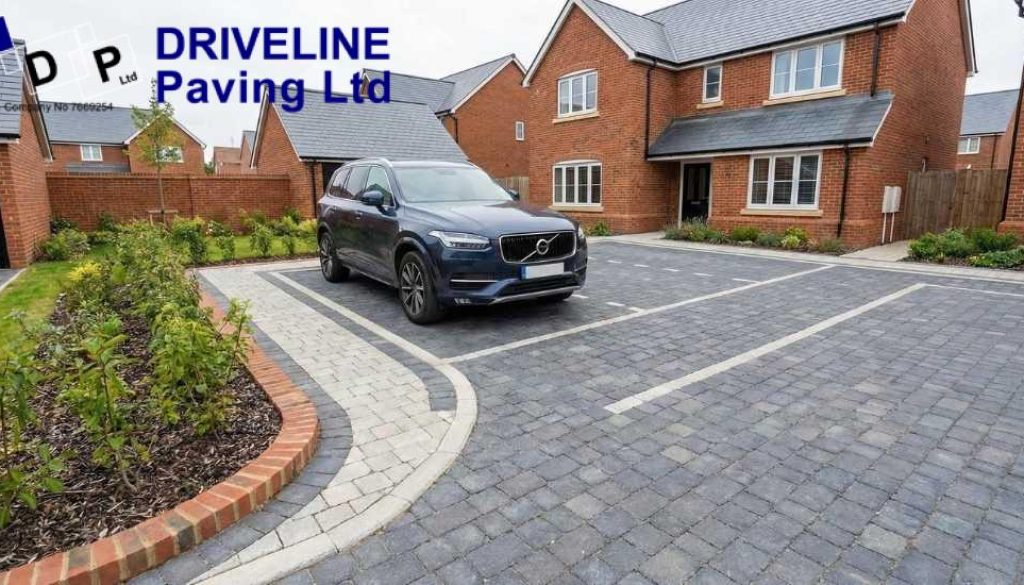
How Driveway Layout Affects Parking, Access, and Safety
A driveway is not simply a surface to park on. Its layout determines how easily you enter, exit, turn, and move safely around your property.
Poor driveway layout design creates daily inconvenience. Tight angles. Awkward reversing. Limited visibility. Restricted pedestrian movement.
February is a practical time to review layout properly. Without installation pressure, you can refine how the space actually works before committing in spring.
Turning Space Matters More Than You Think
Many driveways are sized for parking but not for manoeuvring.
If vehicles must reverse blindly into the road or perform multiple corrections to exit, layout has not been optimised.
Effective driveway layout design considers:
- Vehicle turning radius
- Entry and exit angles
- Road width and traffic flow
- Gate positioning
- Garage access alignment
A well-designed layout reduces stress every time you leave the property.
Space is not only about width. It is about how that width is used.
Parking Capacity Without Congestion
Adding extra parking spaces sounds beneficial, but overcrowding can reduce usability.
Driveway layout design should assess:
- Realistic vehicle size
- Door opening clearance
- Safe walking space between vehicles
- Access to entrances without obstruction
Overlapping parking areas often create friction between convenience and safety. Good layout ensures each vehicle can park and leave without compromise.
Gradient and Slope Influence Safety
Gradients are not purely structural concerns. They directly affect daily usability, safety, and long-term comfort.
Excessive slope can lead to:
- Reduced tyre traction during wet conditions
- Drainage running towards the property
- Difficulty reversing uphill
- Increased pedestrian slipping risk
A driveway that feels steep may still meet minimum structural tolerance, but that does not mean it feels safe or convenient.
When the slope is too aggressive, vehicles may scrape at entry points. Passengers stepping out onto angled surfaces may feel unstable. In winter conditions, even slight gradients can become hazardous if poorly planned.
Proper driveway layout design integrates suitable fall without sacrificing access. Surface angle should support water runoff while maintaining comfortable vehicle movement. The aim is subtle control, not dramatic incline.
Balanced gradient is one of the most overlooked aspects of functional design.
Clear Pedestrian Pathways Improve Daily Use
Driveways often double as access routes for children, visitors, and delivery drivers. Treating the entire surface purely as vehicle space increases risk.
Design should separate vehicle space from pedestrian flow where possible.
This may include:
- Defined walkway edges
- Subtle changes in paving pattern
- Slight level differentiation
- Adequate lighting planning
A clearly indicated walkway, even without physical barriers, creates intuitive movement patterns. People naturally follow defined routes when cues are visible.
When pedestrians must walk directly behind parked vehicles, risk increases. Children crossing reversing zones or visitors stepping unexpectedly into vehicle paths create avoidable hazards.
A considered layout improves both function and safety. It supports everyday use rather than forcing compromise between parking and access.
Visibility and Sightlines at Entry Points
Driveway entrances that limit visibility create hazards, particularly when exiting onto busier roads.
Layout should account for:
- Clear sightlines onto the road
- Appropriate gate placement
- Avoidance of blind corners
- Removal of obstructive planting near entry
Even minor obstructions such as tall hedging or incorrectly positioned pillars can reduce visibility significantly.
Positioning parking too close to the entrance can also restrict view angles. Slight adjustments in layout depth can improve sightlines without expanding footprint.
Small positional adjustments can dramatically improve safety when exiting onto busy roads.
Good design anticipates movement rather than reacting to it. It considers how vehicles approach and leave, not just how they sit when parked.
Integration With Existing Features
A driveway rarely exists in isolation. It interacts constantly with surrounding elements.
These include:
- Front doors
- Garage openings
- Garden boundaries
- Retaining walls
- Fencing
Poor driveway layout design often ignores these relationships. The result may be awkward alignment or blocked access to key areas.
Alignment should feel natural. Parking should not block pathways to entrances. Vehicles should not overhang steps or narrow pedestrian access.
Balanced integration improves both appearance and usability. The driveway should frame the property rather than dominate it.
When layout respects architectural features, the entire frontage feels more cohesive.
Good Read: Maximising Kerb Appeal: Driveway Design Ideas for Essex Properties
Space Planning for Larger Modern Vehicles
Vehicle sizes have increased over time. Many older driveways were designed for narrower cars and fewer vehicles per household.
If your driveway was installed years ago, layout may no longer reflect modern vehicle dimensions.
You may notice:
- Limited door opening space
- Reduced clearance between vehicles
- Difficulty manoeuvring larger SUVs
- Restricted turning arcs
Planning now allows you to:
- Reconfigure parking zones
- Expand turning areas
- Adjust edge positioning
- Improve access for multiple vehicles
Even modest increases in usable space can transform practicality. February is an ideal period to reassess practicality before committing to installation. Measuring vehicles accurately and mapping realistic turning space avoids layout regret later.
Drainage and Layout Work Together
Layout affects how water behaves across the entire surface. Positioning and fall should guide runoff naturally toward suitable drainage points without creating awkward dips or surface distortion.
Driveway layout design must consider:
- Surface gradient direction
- Drainage channel placement
- Permeable surface options
- Avoidance of water trapping zones
A driveway can be built with quality materials yet still suffer from pooling if layout does not direct water effectively.
Drainage should feel integrated rather than added as an afterthought. Channels placed without design consideration often interrupt visual flow and pedestrian movement.
Poorly planned layout creates standing water regardless of surface quality.
Everyday Usability Is the True Test
The success of a driveway layout is measured daily, not on installation day.
Ask yourself:
- Can I enter and exit smoothly without multiple adjustments?
- Can passengers exit safely with sufficient door clearance?
- Can children move without crossing vehicle paths?
- Is reversing straightforward and visible?
If the answer to any is no, layout redesign may be worthwhile.
A driveway should simplify daily movement, not complicate it. It should reduce stress rather than add friction to routine tasks.
Well-considered driveway layout design quietly improves everyday life. It works without demanding attention. That is the mark of effective planning.
Why February Is the Right Time to Redesign Layout
When installation schedules are tight, layout discussions can become secondary to material choice.
February provides time to:
- Measure accurately
- Mark turning arcs
- Test parking scenarios
- Refine positioning
Planning layout carefully now prevents regret later. Layout changes after installation are disruptive and costly. Getting it right before work begins protects investment.
Design for Function First, Appearance Second
Visual finish matters, but function should lead design.
A driveway that looks impressive yet feels awkward to use will frustrate over time.
Effective driveway layout design balances:
- Parking efficiency
- Smooth vehicle movement
- Safe pedestrian access
- Structural stability
- Clean visual alignment
When these elements align, the driveway feels intuitive.
Plan Layout With Professional Guidance
A professional assessment considers gradients, drainage, structural depth, and vehicle movement together. Rather than fitting vehicles into leftover space, layout should shape the entire installation.
If you are planning a new driveway and want a layout that improves parking, access, and safety, speak with Driveline Paving Ltd.