What to Expect During a Professional Driveway Installation
Planning a new driveway often raises one practical question: what actually happens during installation?
Understanding the driveway installation process helps you compare contractors properly. It removes uncertainty and sets clear expectations before work begins.
February is when many homeowners research before committing in spring. Knowing the stages in advance makes decision-making easier and more confident.
Stage One: Site Survey and Planning
Every professional installation begins before machinery arrives.
The initial visit should include:
- Measuring overall area
- Checking existing levels
- Assessing soil condition
- Reviewing drainage requirements
- Discussing layout and access
This stage determines excavation depth and structural specification.
If planning feels rushed or vague, installation quality may follow the same pattern.
Stage Two: Removal of Existing Surface
The next stage involves removing the current driveway material.
This may include:
- Lifting block paving
- Breaking up concrete
- Removing tarmac
- Clearing loose sub-base
All waste should be responsibly removed from the site.
A clean start allows proper structural preparation.
Stage Three: Excavation to Correct Depth
Excavation is one of the most important steps in the driveway installation process.
The depth depends on:
- Soil condition
- Vehicle load expectations
- Surface type
Proper excavation ensures there is space for:
- Sub-base layers
- Sand or bedding course
- Final surface material
Insufficient depth leads to early settlement. Accurate depth creates structural stability.
Stage Four: Installing the Sub-Base
Once excavation is complete, the structural base is installed.
Typically this includes:
- Laying Type 1 aggregate
- Spreading in controlled layers
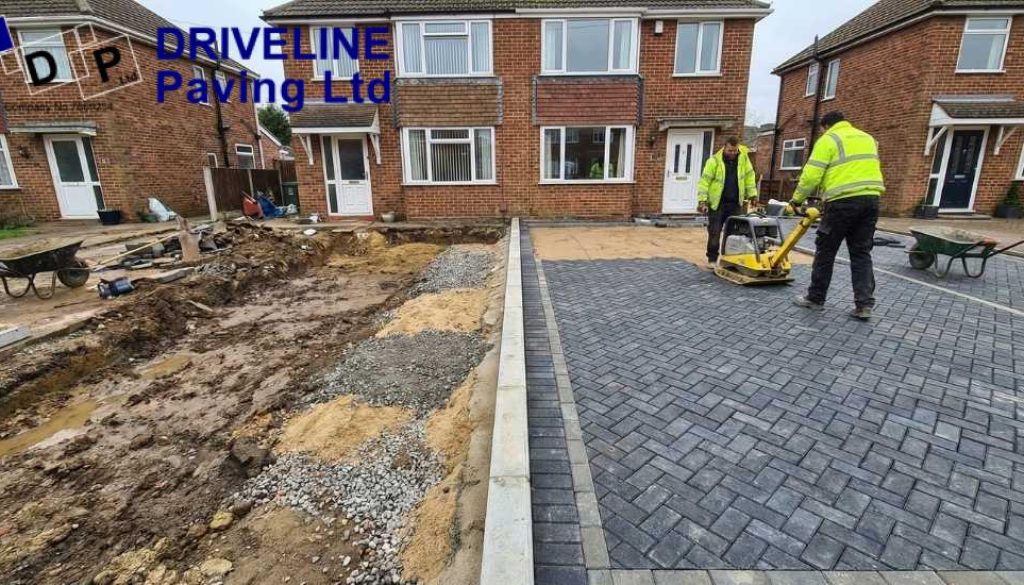
- Mechanical compaction at each stage
Compaction removes air gaps and binds material into a stable platform.
This stage determines load-bearing strength. It is rarely visible afterwards, but it defines longevity.
Stage Five: Drainage Installation
Water management is integrated during groundwork.
Professionals assess:
- Surface fall direction
- Channel drain placement
- Compliance with drainage regulations
- Protection of property foundations
Drainage should guide water away from the home while maintaining surface alignment.
Poor drainage undermines even the best materials.
Stage Six: Edge Restraints and Kerbing
Edges hold the structure in place.
Edge restraints are installed and secured with concrete backing where required.
They prevent:
- Lateral movement
- Surface spreading
- Long-term distortion
Straight, secure edges contribute both structurally and visually.
Stage Seven: Surface Preparation
Before the final surface is laid, the bedding layer is prepared.
For block paving, this involves:
- Levelled sharp sand
- Screeding to precise height
- Maintaining correct falls
For resin bound installations, preparation may include:
- Suitable base priming
- Ensuring surface stability
- Confirming dry conditions
Precision here ensures a smooth final finish.
Stage Eight: Laying the Surface
This is the most visible stage.
Depending on the chosen material, this may involve:
- Placing and aligning paving blocks
- Mixing and applying resin aggregate
- Pouring and finishing concrete
Attention to pattern alignment, consistency, and level is essential.
A professional installation feels measured rather than hurried.
Stage Nine: Final Compaction and Detailing
Once laid, finishing steps complete the driveway installation process.
For block paving, this includes:
- Compacting blocks into position
- Brushing kiln-dried sand into joints
- Checking edge alignment
For resin or concrete, finishing includes:
- Surface smoothing
- Texture consistency
- Clean transitions
Final inspection ensures the driveway meets structural and visual standards.
Stage Ten: Site Clean-Up and Handover
A professional project ends with:
- Removal of debris
- Surface cleaning
- Final level checks
- Walkthrough with the homeowner
Clear communication should include maintenance guidance and care advice.
A tidy handover reflects installation discipline.
Good Read: The Benefits of Professional Landscaping in Essex: Why Hire an Expert?
What Professionals Do Differently
The difference in a professional driveway installation process lies in consistency. It is not about speed or appearance on day one. It is about following a disciplined sequence without skipping steps.
Professionals:
- Follow structured stages from survey to handover
- Use appropriate machinery for excavation and compaction
- Measure rather than estimate excavation depth and levels
- Prioritise groundwork before thinking about surface finish
- Inspect each stage before progressing to the next
Structured stages prevent oversights. Excavation is checked before the sub-base is installed. The sub-base is compacted in layers before bedding is applied. Levels are confirmed before surface material is laid.
Using proper machinery also matters. A plate compactor suitable for block paving differs from heavier equipment required for deep sub-base consolidation. Professional installers choose tools based on structural need, not convenience.
Measurement is another defining difference. Professionals calculate falls, check damp proof course levels, and verify depth rather than relying on visual judgement. A few millimetres at ground level can affect drainage and alignment across the entire driveway.
Shortcuts often occur in hidden stages such as compaction or drainage. These are the areas homeowners rarely see, yet they determine longevity. Rushing compaction leaves voids. Ignoring drainage planning allows water to undermine structure.
Quality installers like Driveline Paving Ltd. treat preparation with the same importance as surface finish. They understand that visible perfection is meaningless without structural stability beneath it.
Timelines and Expectations
Most residential driveway installations take several days, depending on size, layout complexity, and chosen surface material.
Factors influencing timeline include:
- Weather conditions
- Access constraints
- Surface material choice
- Drainage requirements
Wet ground can slow excavation. Restricted access may require smaller machinery or manual handling. Resin installations may depend on dry conditions. Drainage channels and additional groundwork add structural time but improve long-term performance.
Clear communication at the outset prevents misunderstandings. Homeowners should understand:
- Expected start date
- Estimated duration
- Stages of visible disruption
- When vehicles can return to the surface
Professional contractors explain the sequence so you know what to expect each day.
February planning allows you to schedule installation before peak demand limits flexibility. Securing dates early ensures proper crew allocation and avoids compressed timelines later in the season.
A realistic timeline protects quality. Rushing installation rarely improves outcomes.
Confidence Comes From Process Transparency
When you understand the driveway installation process, you can compare contractors beyond surface samples and brochure photographs.
Transparency allows you to evaluate structural standards rather than appearance alone.
Ask about:
- Excavation depth and how it is calculated
- Sub-base thickness and material specification
- Compaction method and equipment used
- Drainage planning and water management strategy
- Edge restraint installation and structural support
Clear answers demonstrate structured working practice. Vague responses often signal inexperience or inconsistency.
Professionals explain their process step by step because they follow it every time.
Installation quality is not decided on the final day. It is built gradually through excavation accuracy, layered compaction, drainage precision, and detailed finishing.
Confidence grows when the process is clear. When each stage is defined and explained, you know the driveway is being constructed properly from the ground upward.
Plan Installation With Clarity
If you are considering a new driveway, understanding the process ensures you invest wisely. From excavation to final detailing, each stage contributes to strength, safety, and appearance.
For a structured and professional approach to driveway installation, discuss with Driveline Paving Ltd. today.