Skip to content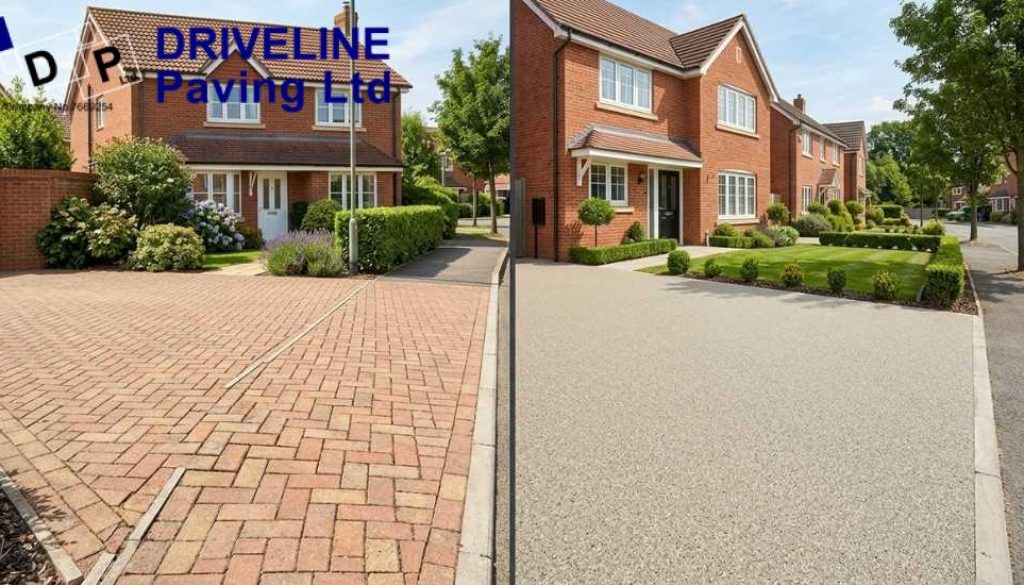
Block Paving vs Resin Driveways: Which One Suits Your Home in 2026?
Choosing a new driveway is rarely just about appearance. It affects drainage, maintenance, durability, and how your property performs day to day. In 2026, block paving and resin driveways remain two of the most requested options across the UK, but they behave very differently once installed.
If you are deciding between them, the better choice depends on how you use your driveway, how much upkeep you are willing to manage, and how important flexibility is over time.
What Is Block Paving?
Block paving uses individual bricks or blocks laid over a prepared sub-base. Each block is set in a pattern and held in place with jointing sand.
It has been widely used for years because it is practical, repairable, and adaptable to different layouts.
Common materials include:
- Concrete blocks
- Clay pavers
- Natural stone in premium installations
The key detail is that the surface is not one solid layer. It is made up of many individual units working together.
What Is a Resin Driveway?
A resin driveway is created by mixing resin with aggregate stones and laying it as a smooth, continuous surface. There are two main types, but resin bound systems are the standard for residential driveways.
The finish is seamless and slightly textured. It is designed to allow water to pass through, making it a popular choice for modern installations.
Unlike block paving, resin forms a single bonded surface rather than separate components.
Appearance and Design Flexibility
The visual difference between these two options is immediate.
Block paving offers structure and pattern. You can choose layouts such as herringbone, stretcher bond, or basket weave. Colours can be mixed to create borders or contrast areas. This makes it easier to match traditional or older properties.
Resin driveways provide a cleaner and more uniform look. The surface is consistent, with a natural stone finish that works well with modern homes. Colour choices come from the aggregate rather than the layout.
In simple terms:
- Block paving gives you more design control
- Resin gives you a more seamless and contemporary finish
If your property already has defined edges, walls, or traditional features, block paving tends to sit more naturally. If the goal is a smooth, minimal look, resin often fits better.
Durability and Long-Term Performance
Both surfaces can last for many years, but they respond differently to use and ground movement.
Block paving is flexible by design. Because it consists of individual units, it can adjust slightly if the ground shifts. This reduces the risk of cracking but can lead to uneven areas if the base is not properly installed.
Resin is more rigid. It creates a solid surface that holds its shape well, but it depends heavily on a stable base. If the foundation fails, cracks can appear on the surface.
This is where installation quality becomes critical.
A well-installed block paving driveway can handle heavy use and be adjusted over time. A properly laid resin driveway provides a stable, even finish but requires the base to be correct from the start.
Drainage and Water Management
Drainage is one of the most important differences between the two.
Resin bound driveways are permeable. Water drains through the surface and into the ground below. This helps prevent puddles and supports SuDS compliance, which is increasingly relevant for UK properties.
Block paving can also be permeable, but only if it is installed with the right system. Standard installations rely on surface runoff and require proper falls and drainage channels to manage water.
Without good drainage:
- Block paving can develop pooling issues
- Resin can fail if water becomes trapped beneath the surface
This is why groundwork matters more than the surface itself. A driveway that looks perfect on day one can fail quickly if water is not managed properly.
Maintenance and Upkeep
Block paving requires regular attention. Over time, jointing sand can wash away, weeds may appear between blocks, and sections can shift slightly. Occasional re-sanding and cleaning are part of keeping it in good condition.
Resin driveways are lower maintenance. The smooth surface makes it harder for weeds to take hold, and there are no joints to refill. Basic cleaning and occasional pressure washing are usually enough.
However, resin is not maintenance-free. Dirt can build up over time, especially in shaded areas, and the surface needs to be kept clean to maintain its appearance.
A simple comparison:
- Block paving needs ongoing small maintenance tasks
- Resin needs less frequent but consistent cleaning
Repairs and Longevity
This is where block paving has a clear advantage.
If part of a block paving driveway becomes damaged or sinks, individual blocks can be lifted and replaced. The repair is usually localised and does not affect the entire surface.
Resin is harder to repair invisibly. While small repairs are possible, colour matching can be difficult, and patched areas may be visible.
Think of it like this:
Block paving behaves like a tiled floor where individual sections can be adjusted. Resin behaves more like a solid sheet where changes are harder to blend in.
For long-term flexibility, block paving offers more control.
Cost Considerations in 2026
Costs vary depending on size, preparation, and materials, but there are general trends.
Block paving:
- Often has a lower upfront cost
- Can increase in price with complex patterns or premium materials
- May involve ongoing maintenance costs
Resin driveways:
- Typically cost more initially
- Offer lower maintenance over time
- Require a suitable base, which can affect pricing
The real cost difference often comes down to groundwork. A poorly prepared base will lead to issues regardless of the surface you choose.
Which Option Suits Your Home?
Choosing between block paving and resin comes down to how you prioritise appearance, maintenance, and long-term flexibility.
Block paving may suit you if:
- You want a traditional or structured look
- You prefer a surface that can be repaired in sections
- You are comfortable with regular maintenance
Resin may suit you if:
- You prefer a clean, modern finish
- You want a permeable surface for better drainage
- You prefer lower day-to-day maintenance
There is no universal “better” option. The right choice depends on how the driveway will be used and how it is installed.
The Role of Installation Quality
No surface will perform well without proper groundwork.
The depth of excavation, the type of sub-base, and how the area is compacted all affect the lifespan of the driveway. Poor preparation leads to sinking, cracking, and drainage issues regardless of material.
This is why working with an experienced contractor matters.
At Driveline Paving, every installation starts with a detailed assessment of the ground conditions and drainage requirements. The focus is on building a stable base first, then applying the chosen surface correctly.
This approach ensures:
- Better load distribution
- Reduced risk of movement
- Proper water management
- A finish that lasts longer
If you are unsure which option suits your property, a site survey can provide clear guidance based on your layout and usage.
Planning For 2026 and Beyond
Driveways are seeing more daily use than before. More vehicles, heavier loads, and changing weather patterns all affect performance.
Choosing the right material now helps avoid ongoing issues later.
Block paving remains a reliable choice for flexibility and repairability. Resin continues to grow in popularity for its clean appearance and drainage benefits.
The decision is less about trends and more about how each option fits your property and routine.
Making the Right Choice For Your Driveway
Block paving and resin driveways each offer clear advantages. One gives flexibility and easier repairs. The other provides a smooth finish with lower maintenance and better drainage.
The key is not just choosing the surface, but ensuring it is installed properly from the ground up.
If you are planning a new driveway in 2026, take the time to assess how you use the space, what level of upkeep you prefer, and how important long-term adaptability is.
For tailored advice and professional installation, contact Driveline Paving today and get a clear recommendation based on your property.