How Drainage Affects Your Driveway’s Lifespan
Most driveways look solid on the surface, yet the real test of their durability is hidden in how well they manage water. Even the strongest materials struggle when water sits, seeps, or freezes in the wrong places. Drainage is one of the most overlooked factors in driveway design, yet it plays a major role in lifespan, safety, and day-to-day performance.
Understanding how drainage works helps homeowners protect their investment and avoid issues that lead to costly repairs.
A well-drained driveway resists frost damage, prevents sinking, and keeps the surface looking good for years. Whether you already have drainage problems or are planning a new installation, this guide shows why water management should always be part of the plan.
Why Water Is the Biggest Threat to Driveway Durability
Water is one of the most persistent forces affecting outdoor surfaces. Even a small amount can cause gradual deterioration if it has nowhere to go. The way water moves above and below your driveway determines whether the surface stays stable or begins to fail.
How poor drainage harms a driveway:
- Water collects on the surface and breaks down materials.
- Puddles soak into the sub-base and weaken the foundation.
- Freeze-thaw cycles create expansion that cracks surfaces.
- Edges start wearing away as water flows toward soft soil.
- Moss and algae grow faster, making the surface slippery.
Slow damage often looks minor at first, like small dips or hairline cracks. Left untreated, these develop into larger faults that shorten the driveway’s lifespan.
Surface Drainage and Why It Matters
Surface drainage deals with how water behaves on top of the driveway. If the surface is level or sloped incorrectly, water stays put instead of flowing toward a drain or garden area.
Signs that surface drainage is failing:
- Puddles appearing after even light rain
- Water collecting near garage doors
- Pools forming at the bottom of slopes
- Algae streaks in areas that stay wet for long periods
These problems weaken the structure over time and increase slip hazards. A good surface design uses gentle slopes that guide water away from pressure points, making the driveway safer and longer-lasting.
Sub-Base Drainage: The Hidden Foundation That Keeps Everything Stable
While surface drainage handles water you can see, sub-base drainage manages water that sinks below the driveway. This is where many driveways fail because homeowners rarely see the early signs.
The sub-base acts like a support cushion. If it becomes waterlogged, it loses strength, causing dips, cracks, and movement. Proper drainage layers ensure water flows downward and away before it can damage the foundation.
A well-built sub-base should:
- Use compacted MOT Type 1 or a similar aggregate
- Stay permeable enough to let water filter down
- Sit on a stable soil layer that encourages natural drainage
- Maintain its shape under pressure and weather changes
When these conditions are met, the driveway remains stable for years rather than slowly collapsing under repeated rainfall.
How Different Driveway Materials Handle Drainage
Driveway materials vary widely in how they respond to water. Some surfaces naturally guide rain into the ground, while others need extra features to manage flow properly. Understanding these differences helps homeowners choose a surface that stays stable and safe through changing weather.
Resin-bound driveways
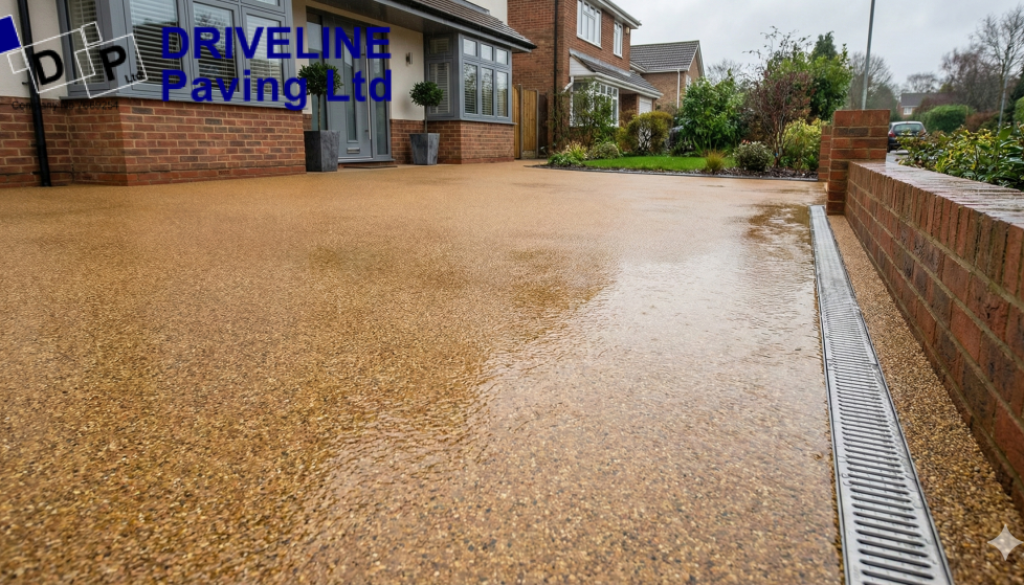
Resin-bound driveways offer some of the strongest drainage performance available. The mix of clear resin and natural aggregates creates a network of tiny gaps that allow rain to filter through the surface rather than sit on top. This permeability helps prevent puddles, reduces the chance of icy patches forming overnight, and supports consistent drying after rain.
Because the water drains downward instead of spreading across the driveway, the surface experiences less wear during winter. When installed on a well-prepared sub-base, resin-bound surfacing acts almost like a built-in drainage system, keeping the driveway functional in all seasons.
Permeable block paving
Permeable block paving takes a structured approach to water management. The blocks are designed with wider joints, and the base beneath them uses graded aggregates that encourage water to move through the layers. Instead of relying on surface run-off, the driveway absorbs rainfall and pushes it into the ground below.
This design helps protect the sub-base from waterlogging and reduces pressure on nearby drains during heavy downpours. It is an effective option for homeowners who want the look of block paving with added drainage efficiency.
Standard block paving
Standard block paving is durable and visually flexible, but it does not drain water unless supported by extra features. The joints between blocks can handle small amounts of run-off, yet they are not wide enough to manage heavy or frequent rainfall. Without channel drains, soakaways, or a correctly shaped slope, water can sit between the blocks, soften the sub-base, or freeze in winter.
Jointing sand may wash away in storms, which means maintenance becomes part of long-term care. When paired with proper drainage design, however, standard block paving still delivers strong performance.
Concrete and tarmac
Concrete and tarmac are solid, non-permeable surfaces. Because they do not absorb water at all, drainage depends entirely on how the driveway is shaped. A well-built concrete or tarmac driveway uses subtle gradients, channels, or slot drains to carry water toward safer areas. When these elements are missing, water pools quickly, leading to cracks, surface erosion, and damage to the base.
Homeowners who prefer these materials must ensure the drainage plan is built into the installation from the start to prevent long-term issues.
Matching the driveway material to the right drainage design is often the difference between a surface that lasts decades and one that struggles after each heavy rainfall.
Common Drainage Features That Protect Your Driveway
Installing drainage elements prevents water from gathering in high-risk zones. These additions can extend a driveway’s lifespan dramatically.
Helpful drainage features include:
- Channel drains along garage fronts
- French drains that direct water into the soil
- Soakaways positioned underground to manage overflow
- Slot drains for modern, discreet drainage
- Gravel borders that absorb excess water
- Gentle gradients to guide water away from the house
Even simple adjustments such as reshaping slopes can make a meaningful difference.
How Poor Drainage Shortens Your Driveway’s Lifespan
Homeowners often focus on surface cracks, yet poor drainage is usually the underlying cause.
Damage caused by drainage issues:
- Sub-base erosion
- Loose or lifted block paving
- Cracking in concrete or resin
- Frost heave that raises or shifts sections of the surface
- Deterioration of edges and borders
These issues often require full resurfacing rather than quick repairs, which makes early drainage planning essential.
Signs Your Driveway Needs Drainage Improvements
If drainage has been neglected, the driveway will show clear signs of stress. Spotting these early prevents further damage.
Look for:
- Regular puddles in the same spots
- Crumbling edges
- Areas that sink after rain
- Moss growth that spreads quickly
- Slippery zones that remain damp for hours
- Water flowing toward doors or neighbouring boundaries
Homeowners often compare these signs to a slow leak in a roof. You can ignore it for a while, but eventually it becomes unavoidable.
Homeowners in Chelmsford who want a driveway that drains properly and stays durable can explore water-smart options on our Chelmsford driveway services page. The page highlights resin-bound, block paving, and permeable solutions designed to prevent flooding and extend driveway lifespan.
A Practical Path to a Longer Lasting Driveway
Good drainage is one of the most effective ways to protect a driveway from premature wear. When water flows correctly above and below the surface, the entire structure stays stable, safer to use, and visually appealing for years. Investing in proper gradients, permeable materials, and well-designed drainage systems pays off by reducing repairs and extending lifespan.
Whether you are planning a new driveway or improving an existing one, Driveline Paving Ltd can help design a surface that manages water efficiently and stays resilient through every season.
Book your driveway project with us.
Frequently Asked Questions
What is the most common drainage problem in driveways?
Standing water caused by poor slope design is the most frequent issue. It weakens the surface and encourages cracks and sinking.
Is resin-bound the best choice for drainage?
Resin-bound surfaces offer excellent permeability, making them one of the most effective drainage-friendly materials for UK homes.
Can drainage be added to an existing driveway?
Yes. Channel drains, gravel borders, or new slopes can often be added without replacing the full surface.
Why do block paving joints wash out?
Heavy rain can dislodge jointing sand. This reduces stability and may require topping up to maintain the surface.
How long does a well-drained driveway last?
When drainage is handled correctly, resin and block paving can last 20 to 25 years or more with routine maintenance.
What causes driveway sinking?
Most sinking is due to a waterlogged or poorly compacted sub-base. Improving drainage and rebuilding the base solves this.
Do I need planning permission for drainage changes?
Permeable surfaces usually do not require permission. Non-permeable materials may need drainage provisions to comply with regulations.


