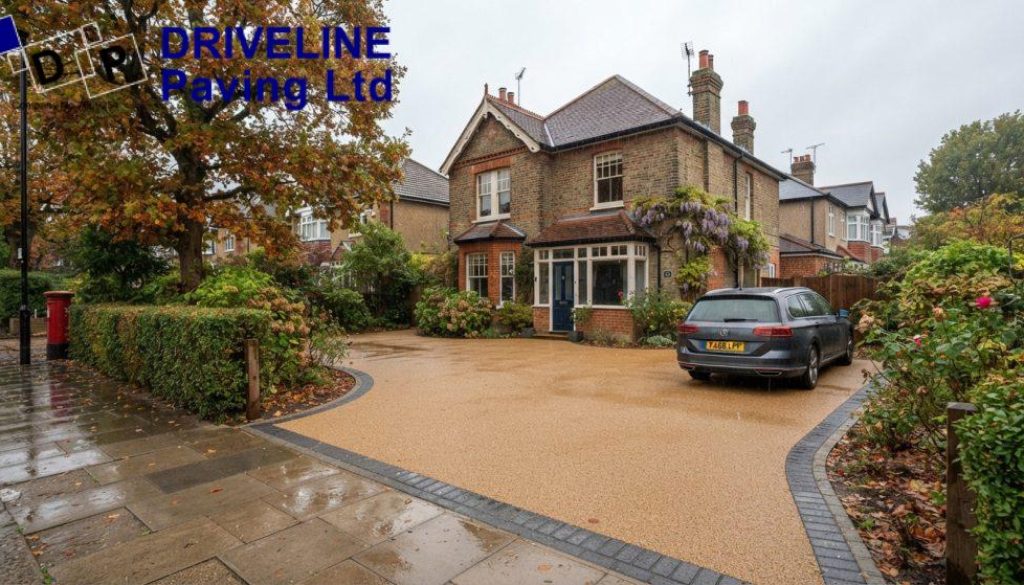
Resin Driveways in Epping: How They Handle Wet Autumn Weather
Autumn is when a driveway shows its weaknesses. After a few days of steady rain, you can see exactly where water sits, where it runs down to the road and which corner turns into a puddle every time you step out of the car. For many homeowners thinking about a resin driveway, Epping’s wet months are what prompt the question in the first place.
Resin bound surfaces have a reputation for handling rain well, and for good reason. They let water drain through the surface instead of across it. That only works when the driveway is built correctly, though, and there are two quite different products sold under the “resin” name.
This guide explains how a resin bound driveway deals with rain, what to check before you commit, how to look after one through autumn and winter, and how the planning rules for front driveways apply.
Resin Bound or Resin Bonded: The Difference That Decides Drainage
The word “resin” covers two surfaces that look similar from the pavement but behave very differently in the rain. Knowing which one you are being quoted for is the first thing to settle.
Resin bound means the stones are mixed with resin before laying, then spread and hand-trowelled into a smooth, even layer. Resin bonded means a layer of resin is spread over the base first and loose stone is scattered on top, where it sticks.
The comparison below shows why the method matters.
|
Resin bound |
Resin bonded |
|
|
How it is laid |
Stone and resin mixed, then trowelled flat |
Resin spread first, loose stone scattered on top |
|
Finish |
Smooth, with stones held fully in the resin |
Textured, gravel-like surface |
|
Water |
Drains through the surface when laid on a permeable base |
Does not drain through, the resin layer is solid |
|
Front driveway planning |
Usually no permission needed if laid on a permeable base |
Needs drainage to a permeable area or planning permission |
|
Loose stones |
Very few once cured |
Some loose stones can come away over time |
For a front driveway where rain is the main concern, resin bound is the one most homeowners mean when they ask about a resin driveway, and it is the surface this guide focuses on.
How a Resin Bound Driveway Drains
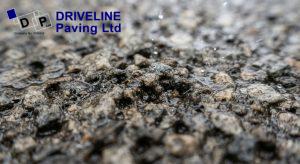
The drainage comes from the way the surface is put together. Understanding it helps explain why the base underneath matters just as much as the finish on top.
In a resin bound mix, each stone is coated in a thin film of resin. When the mix is trowelled out, the stones stick to each other only where they touch. Think of a cereal bar, where each cluster is glued to its neighbours at a few points but small air pockets remain all through the bar. Those pockets link up into tiny channels, and rainwater runs down through them instead of sitting on top.
Why the Base Matters as Much as the Surface
Water that passes through the resin has to go somewhere. On a properly built resin driveway, it drops into a permeable base, usually an open-graded stone sub-base or a porous asphalt layer, and soaks slowly into the ground below.
If the base cannot take that water, the surface stays permeable but the system does not. Water collects under the resin, and the driveway behaves much like a solid surface during heavy rain.
Laying Over an Existing Driveway
Some quotes offer to lay resin straight over an old tarmac or concrete drive. That can work when the existing surface is sound, and it often costs less than digging out. The catch is drainage. Standard tarmac and concrete are impermeable, so rain passes through the resin and then runs across the old surface underneath. The finish looks the same, but it no longer drains into the ground.
If drainage is the reason you want a resin driveway, ask any installer what the base will be and whether water will reach the ground.
What Wet Weather Means for Epping Driveways
Every town has its own mix of housing, trees and ground conditions, and these shape how a driveway copes with rain. For a resin driveway in Epping, a few local factors are worth thinking about.
Many roads in and around Epping are lined with mature trees, and homes near Epping Forest see heavy leaf fall from October onwards. Leaves on any driveway hold water against the surface. On a resin drive, a layer of rotting leaves left for weeks can also start to fill the small drainage channels.
Ground conditions vary from one street to the next. Where the soil drains slowly, as clay soils do, a permeable driveway may need a deeper sub-base to hold water while it soaks away, or a planned route to a soakaway or planted area. A good survey checks this before work starts rather than assuming every garden drains the same way.
Many older front drives also slope down to the road. On an impermeable surface, that sends rainwater straight into the gutter, which is part of what the planning rules for front gardens are designed to reduce.
Resin Driveways and Planning Permission
Drainage is closely tied to planning rules for front gardens. This often surprises homeowners replacing a drive for the first time.
In England, paving more than five square metres of a front garden with an impermeable surface that drains onto the road needs planning permission. Permeable surfaces, or impermeable ones that drain to a lawn or border within the property, generally do not.
A resin bound driveway laid on a permeable base usually falls on the permeable side of that rule. A resin bonded surface, or resin laid over solid tarmac with no other drainage, does not. Our guide to planning rules for front driveways explains the wider rules for new and replacement driveways in more detail.
Looking After a Resin Driveway Through Autumn and Winter
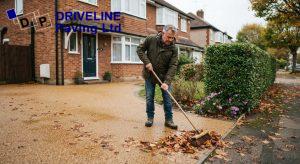
Resin bound surfaces are low maintenance, not no maintenance. A little regular care keeps them draining properly and looking good through the wetter months.
The main job in autumn is keeping the surface clear so the drainage channels stay open:
- Sweep leaves, twigs and grit away regularly with a stiff outdoor brush, especially under trees and in corners where debris collects.
- Rinse the surface with a garden hose or a low-pressure washer a few times a year. A high-pressure jet held too close can damage the finish.
- Treat moss and algae in shady spots early, using a product the installer recommends for resin surfaces.
- Mop up oil or fuel spills quickly, as some chemicals can mark resin.
For winter, use a plastic shovel to clear snow, not a metal one that can scratch the surface. Check with your installer before using rock salt or de-icer, as recommendations vary between resin systems.
Can a Resin Driveway Be Laid in Autumn?
Rain affects a resin driveway after it is laid, but it also affects the installation itself. This is worth knowing if you are planning ahead.
Resin needs dry conditions to cure properly. Rain on fresh resin can leave cloudy or milky patches, and installers also work within temperature limits set by the resin manufacturer. Laying is still possible in autumn, but it depends on finding a run of suitable days, and installers will reschedule if the forecast turns.
That makes October a good time to have a survey done and a quote prepared, even if the installation itself is booked for a suitable dry window. You see your current driveway at its worst in the rain, which gives a clear brief for what the new one needs to fix.
Is a Resin Driveway Right for Your Home?
Resin bound suits many Epping homes, but it is not the only answer. Weighing it against your situation helps you avoid paying for features you do not need.
Resin bound tends to suit homeowners who want a smooth, seamless finish, a permeable front drive without extra drainage channels and a surface that needs little more than sweeping. It also works well for paths and patios that match the driveway.
It may not suit every property. Where an old base needs replacing completely, the cost of excavation and a new permeable sub-base should be factored in. Some homeowners also prefer the pattern and repairability of block paving, where individual blocks can be lifted, or the lower upfront cost of tarmac with added drainage.
If you are comparing options, our driveway installation page covers resin bound, block paving, tarmac and gravel side by side.
Planning a Resin Driveway in Epping
A resin driveway in Epping can handle autumn rain well, as long as it is resin bound, laid on a properly prepared permeable base and kept clear of leaves through the wetter months. The finish matters less than the parts you cannot see, which is why the survey and the base specification deserve as much attention as the colour you choose.
Driveline Paving installs resin driveways in Epping and across Essex and North London. We check how your ground drains, explain what base your drive needs and plan the installation around suitable weather.
Request a free resin driveway quote or call 01992 879701 to talk it through. Keep it local, Keep it Driveline.


