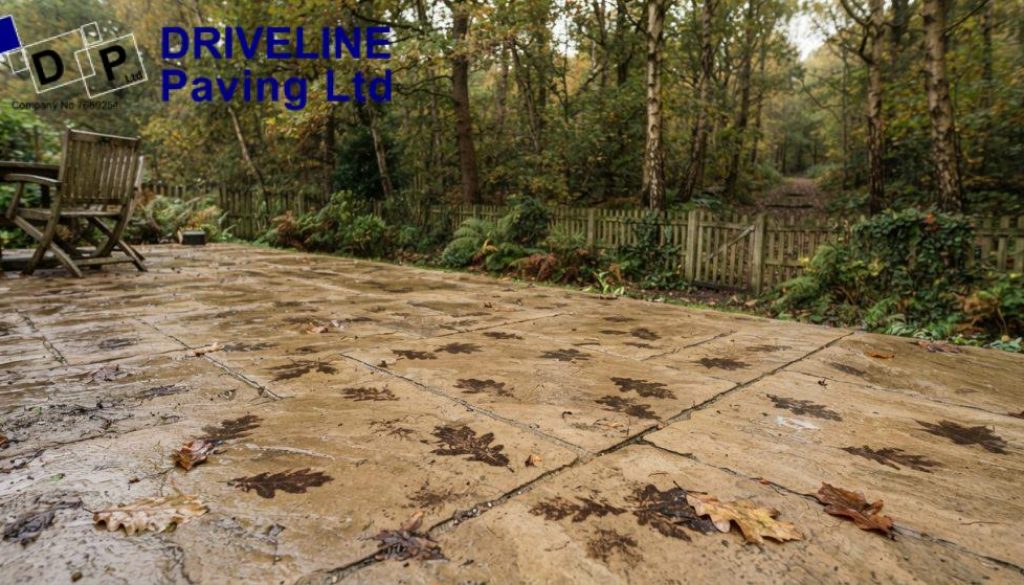
How to Remove Leaf Stains From Patio Paving This Autumn
Sweep up a pile of wet leaves in late October and you will often find a brown silhouette of each one printed on the stone underneath. Leaf stains are one of the most common autumn complaints about garden patios, and they can be stubborn. Knowing how to remove leaf stains from patio paving without damaging the surface depends mostly on what your patio is made of.
The wrong cleaner or too much pressure can do more lasting harm than the stain itself. Household bleach can discolour natural stone, and a jet washer held too close can strip the face of a sandstone slab in seconds.
This guide explains why leaves leave marks, which paving materials are most at risk and how to clean each one safely. It also covers how to stop stains forming in the first place. That matters most for gardens near Epping Forest and other tree-lined parts of Essex and North London, where leaf fall is heavy.
Why Leaves Stain Patio Paving
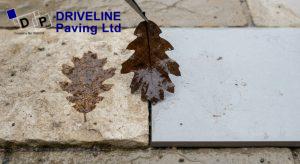
Leaf stains are not dirt in the usual sense. They are dyes, and understanding where they come from explains why some patios mark badly while others barely notice.
Leaves contain natural compounds called tannins. These are the same family of compounds that give tea its colour. When a wet leaf sits on a patio, rain draws the tannins out and leaves them on the stone. In effect, every soggy leaf on your patio is brewing a weak cup of tea, and the stone underneath is the cup.
On a dense surface, those tannins sit on top and rinse away. On a porous surface, they soak into the tiny pores of the stone, the same way tea leaves a ring inside an unglazed mug. The longer the leaf stays and the wetter the weather, the deeper the colour goes.
Some trees mark more than others. Oak, beech and other tannin-rich leaves tend to leave darker prints than lighter, thinner leaves. Fallen fruit, seed cases and berries can stain too.
Which Patio Materials Stain Most
How easily a patio stains comes down to how porous the paving is. The comparison below covers the materials most often found in Essex and North London gardens.
|
Paving material |
How porous? |
How it reacts to leaf stains |
|
Porcelain |
Very low |
Stains usually sit on the surface and wash off with water and a mild cleaner |
|
Sandstone |
High |
Absorbs tannins readily, so pale sandstone shows stains clearly and needs gentle treatment |
|
Limestone |
Medium to high |
Marks easily and is sensitive to acidic cleaners, which can etch the surface |
|
Granite |
Low to medium |
More resistant than sandstone, though lighter granites can still mark |
|
Concrete slabs |
Medium to high |
Absorbs tannins, and rough textured slabs hold staining in the surface |
If you are still choosing paving, our comparison of porcelain and sandstone patios looks at how each material copes with day-to-day wear, including staining.
What Not to Use on a Stained Patio
Before reaching for a cleaner, it helps to know which common fixes do more harm than good. Most lasting damage to patios comes from well-meant cleaning, not from the stain.
- Household chlorine bleach on natural stone. Bleach can leave pale or yellowed patches on sandstone that will not fade.
- Acidic cleaners on limestone. Vinegar and acid-based products can etch limestone and dull its surface.
- Wire brushes. They scratch stone and concrete. Use a stiff nylon brush instead.
- A pressure washer at close range. High pressure can erode the surface of sandstone and concrete and blast sand or mortar out of the joints.
- Mixing products. Never combine different cleaners, particularly bleach with anything acidic.
Whatever you choose, test it on a small, hidden area first and let it dry before judging the result.
How to Clean Leaf Stains by Paving Type
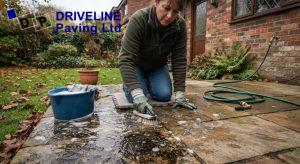
Each material needs a slightly different approach. Start with the gentlest method and only move up if the stain is still there once the patio has dried.
Porcelain
Porcelain absorbs so little water that leaf stains rarely get into the slab. In most cases, the mark sits in a film of dirt on the surface.
Sweep the patio, wet it with a hose, then scrub with warm water and a mild detergent or a cleaner made for porcelain paving. Rinse thoroughly. If a faint shadow remains, it is often in the grout or jointing rather than the slab, and a second clean of the joints usually shifts it.
Sandstone and Limestone
Natural stone needs the most care, because it absorbs the stain and is easily damaged by the wrong cleaner. For most light to moderate stains, this approach works well:
- Clear the leaves and sweep away loose debris.
- Wet the stained area with clean water so the stone does not soak up the cleaner too quickly.
- Apply a cleaner labelled as safe for natural stone. Oxygen-based cleaners, which use sodium percarbonate rather than chlorine, are a common choice for organic stains on sandstone. On limestone, check the label confirms it is suitable.
- Leave it for the time stated on the product, keeping the area damp.
- Scrub gently with a stiff nylon brush, working with the grain of riven stone.
- Rinse well with a hose and let the patio dry completely before deciding whether to repeat.
Specialist leaf and tannin stain removers for natural stone are also sold by paving suppliers and can help with darker marks.
Concrete Slabs
Concrete slabs are more forgiving of cleaning products than natural stone, but their surface can still be worn away by too much pressure. An oxygen-based cleaner and a stiff nylon brush will lift most leaf stains. If you use a pressure washer, keep the nozzle well back from the surface, use a wide fan setting and avoid aiming into the joints.
When Leaf Stains Will Not Shift
Some stains do not come out completely, especially old marks on pale sandstone. Before deciding what to do next, it is worth knowing what time and sunlight can do on their own.
Sunlight fades tannin stains over time. A mark that looks dark in November often looks much lighter by late spring once the patio has had a few months of daylight. If a stain has only partly lifted after cleaning, waiting a season before trying anything stronger is often the safer choice.
For stains that remain, a professional stone cleaner has stronger treatments and the experience to use them without harming the surface. Where a slab is badly marked or damaged by past cleaning, lifting it and laying a replacement can be the simplest answer. With natural stone, it is worth keeping a few spare slabs from the original order, as colours vary between batches.
Stopping Leaf Stains Before They Start
Preventing stains takes far less effort than removing them, and a few habits through autumn make a noticeable difference.
The most effective step is simply clearing leaves before they sit for long. During peak leaf fall, from mid-October into November, a quick sweep every few days stops tannins soaking in. Pay most attention after rain, when leaves are wet and stains form fastest.
Other measures help too:
- Keep plant pots, furniture covers and doormats off the patio during leaf season, as leaves gather around them and stay damp.
- Clear gutters and drainage channels so water does not pool on the paving.
- Ask about a sealer suited to your stone. A suitable sealer slows absorption, though it needs reapplying over time and may change the look of some stones.
- Think about planting. Trees and shrubs overhanging a pale patio will mark it every year. If you are redesigning the garden, garden landscaping that places deciduous trees away from paved areas cuts the problem at its source.
Keeping Your Patio Clear Through Leaf Season
Leaf stains are a seasonal nuisance rather than a sign that anything is wrong with your patio. With the right cleaner for your paving, a gentle brush and some patience, most marks can be lifted or faded without harming the stone. Regular sweeping through October and November does the rest.
If stains have been made worse by past cleaning, slabs are damaged, or you are thinking about replacing a patio that marks every autumn, Driveline Paving can help. We lay patio paving across Essex and North London, and our patio layers in Loughton work in some of the leafiest streets near Epping Forest. Ask for free patio advice or call 01992 879701. Keep it local, Keep it Driveline.


